
It is one of the most common questions we hear from readers: does Medicare cover hearing aids? If you or a parent are shopping for hearing aids and wondering whether Medicare will help pay for them, here is the short answer: Original Medicare (Part A and Part B) does not cover hearing aids, hearing aid fittings, or the exams used to fit them. That exclusion has been written into Medicare law since the program began in 1965, and it still stands in 2026. As Medicare.gov puts it plainly, "Medicare doesn't cover hearing aids or exams for fitting hearing aids."
Wondering whether Medicare covers hearing aids in 2026? The answer is no under Original Medicare — but that does not mean you have no options. Depending on your plan and your budget, you may be able to use a Medicare Advantage hearing benefit, HSA or FSA dollars, or a lower-cost over-the-counter (OTC) hearing aid. This guide walks through exactly what Medicare does and does not pay for in 2026, how the alternatives compare, and how to choose the right device for mild to moderate hearing loss.
1. What Original Medicare Actually Covers
Original Medicare is split into Part A (hospital insurance) and Part B (medical insurance). When it comes to hearing, the distinction that matters is between a diagnostic exam and a fitting exam:
- Diagnostic hearing exams: Part B may cover a hearing exam when a doctor orders it to evaluate a medical problem, such as sudden hearing loss, dizziness, or a suspected condition. You generally pay 20% of the Medicare-approved amount after the Part B deductible, which is about in 2026.
- Routine hearing tests for fitting hearing aids: Not covered. If the purpose of the test is to fit a hearing aid, Medicare treats it as part of the excluded hearing aid benefit.
- Hearing aids themselves: Not covered, at any price point, under Original Medicare.
| Service | Covered by Part B? | What you pay in 2026 |
|---|---|---|
| Diagnostic hearing exam ordered by a doctor | Usually yes | 20% coinsurance after the ~ deductible |
| Routine hearing test to fit a hearing aid | No | Full cost |
| Hearing aid device (prescription or OTC) | No | Full cost |
| Ear molds, fittings, and programming | No | Full cost |
So even if you have Original Medicare plus a Medigap supplement, hearing aids remain an out-of-pocket cost. Medigap helps with deductibles and coinsurance for covered services, but it does not add new benefits like hearing aids.
2. Why Hearing Aids Are Excluded From Medicare
Medicare hearing aid coverage has been excluded since the program was created in 1965, and Congress has never removed that exclusion. Because of that long-standing rule, most of the innovation in hearing coverage has happened outside Original Medicare — through private Medicare Advantage plans, employer and private insurance, tax-advantaged accounts, and the newer OTC hearing aid category the FDA created in 2022.
It is worth understanding one detail, because it explains most of the confusion online: the exclusion covers both the device and the professional services tied to it. That is why a senior with excellent Original Medicare coverage can still pay full price for a pair of hearing aids, while a neighbor on a private Medicare Advantage plan may get a few hundred dollars toward the same purchase.
3. Does Medicare Cover OTC Hearing Aids?
No. Original Medicare does not cover OTC hearing aids either, even though they are now regulated medical devices available without a prescription. However, some Medicare Advantage plans offer an OTC allowance — a set dollar amount each year that members can spend on approved over-the-counter health products, which in some plans includes OTC hearing aids. Whether OTC hearing aids qualify, and how much the allowance is, depends entirely on your specific plan. Check your plan's Summary of Benefits or call member services before you buy.
4. Your Four Realistic Options in 2026
| Option | What it can pay for | Typical out-of-pocket | Best for |
|---|---|---|---|
| Medicare Advantage (Part C) | Allowance or fixed copay per device, limited exams | About –,249 per device after the benefit | Members already enrolled in an MA plan with a hearing benefit |
| Medigap | Nothing extra for hearing aids | Full price | Nobody — it does not add hearing coverage |
| HSA / FSA | Hearing aids as an eligible medical expense | Full price paid with pre-tax dollars | Anyone with a tax-advantaged account |
| OTC hearing aids | Device only, no insurance involved | A few hundred dollars per pair | Adults with mild to moderate hearing loss who want to start fast |
4.1 Medicare Advantage (Part C) hearing benefits
Some Medicare Advantage plans include a hearing aid benefit in the form of an allowance toward devices or a fixed copay per hearing aid. Benefits vary widely by insurer, plan, and county. As an example, some 2026 plans list hearing aid copays ranging from roughly to ,249 per device, with limits such as up to two hearing aids per year and one routine hearing exam annually at no copay when you use an in-network provider. Because these benefits are plan-specific, the single most useful step you can take is to read your plan's Summary of Benefits and confirm the network of hearing providers.
4.2 Medicare Supplement (Medigap)
Medigap plans (A, B, C, D, F, G, K, L, M, N) help pay your share of Original Medicare costs. None of them add hearing aid coverage. If you rely on Original Medicare plus Medigap, budget for hearing aids separately.
4.3 HSA and FSA funds
If you have a Health Savings Account (HSA) or a Flexible Spending Account (FSA), hearing aids — including OTC hearing aids — are generally eligible medical expenses. Paying with pre-tax dollars effectively reduces the real cost by your marginal tax rate, which can be meaningful on a device that costs several hundred dollars. Keep your receipt and, for FSA, confirm your plan's rules and deadlines.
4.4 OTC hearing aids
Since August 2022, the FDA has allowed OTC hearing aids to be sold directly to adults 18 and older with perceived mild to moderate hearing loss, with no prescription and no clinic visit. OTC devices cost far less than traditional prescription hearing aids — which often run ,000 to ,000 per pair — and can be a practical option when insurance will not help. Brands like Cearvol build app-controlled, Bluetooth-enabled OTC hearing aids designed for everyday conversation, TV, and noisy rooms.
5. OTC vs Prescription Hearing Aids: How They Compare
| Feature | OTC Hearing Aid | Prescription Hearing Aid |
|---|---|---|
| Prescription required | No | Yes |
| Who it is for | Adults 18+ with mild to moderate hearing loss | Any degree of hearing loss |
| Typical cost | Under to about ,000 | Often ,000 to ,000 per pair |
| Fitting | Self-fitting or remote support | In-person audiologist fitting |
| Medicare coverage | Not covered by Original Medicare | Not covered by Original Medicare |
6. Who Qualifies for OTC Hearing Aids?
OTC hearing aids are intended for adults 18 and older with perceived mild to moderate hearing loss. You do not need a prescription, but you should have a reasonable sense that your hearing loss is mild to moderate. Signs include often asking people to repeat themselves, turning the TV up louder than others prefer, struggling in restaurants or group conversations, and finding phone calls hard to follow.
If you have severe or profound hearing loss, sudden hearing loss, hearing loss in only one ear, dizziness, ear pain, or a history of ear surgery, see a doctor or audiologist first — OTC devices are not the right starting point for those situations.
7. How to Choose an OTC Hearing Aid: A Quick Checklist
- Confirm the category: Make sure it is an FDA-registered OTC hearing aid, not a personal sound amplifier (PSAP).
- Check the fit and comfort: Look for multiple ear tip sizes and a lightweight design you can wear for hours.
- Look for app control and a hearing test: A guided in-app hearing test helps personalize the sound to your ears. Cearvol's Wave Lite includes app-based controls and scene modes.
- Check noise handling: If you struggle in restaurants or on calls, prioritize noise reduction and directional speech focus.
- Consider Bluetooth: If you want to stream calls, music, or TV, choose a Bluetooth-enabled model such as the Diamond X1.
- Check the trial policy: A risk-free home trial matters — real-world testing beats a showroom demo.
8. Popular Cearvol Options for Mild to Moderate Hearing Loss
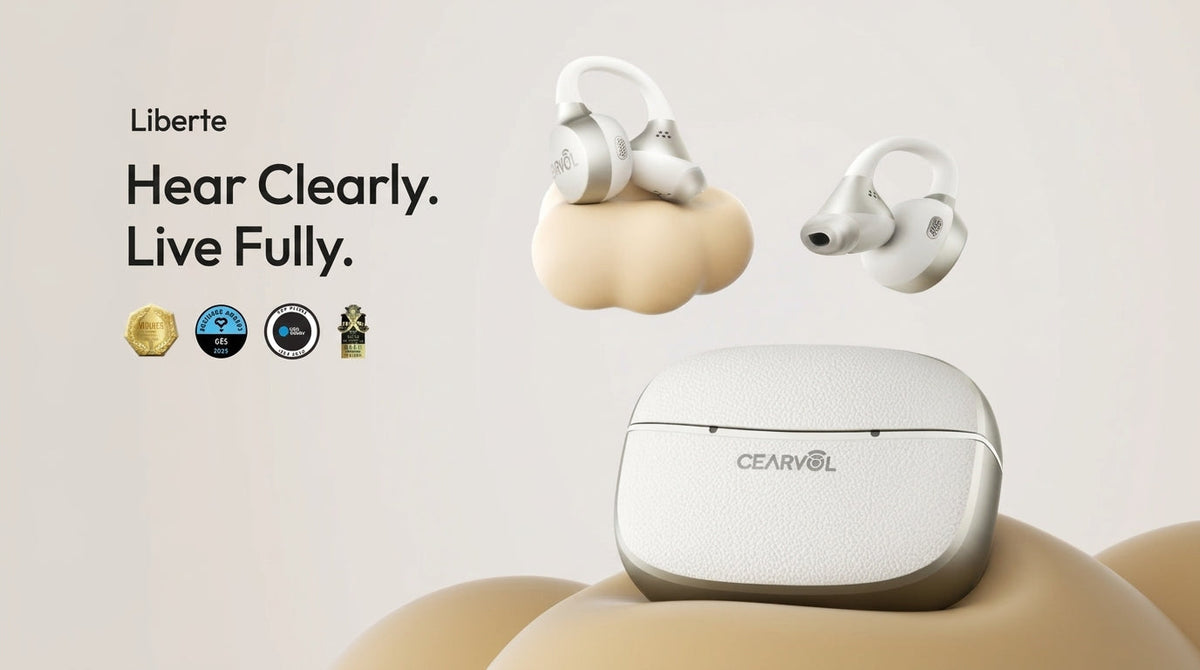
- Cearvol Liberte — a light, comfortable open-ear style for all-day wear.
- Cearvol Wave Lite — app control, Bluetooth, and multiple scene modes.
- Cearvol Diamond X1 — rechargeable and Bluetooth-enabled, with app tuning.
- Cearvol Nano — small and discreet for a barely-there look.
9. A Simple Plan for 2026
If you have Original Medicare, budget for hearing aids as an out-of-pocket expense and check three things in this order: (1) whether your Medicare Advantage plan includes a hearing benefit, (2) whether you can pay with HSA or FSA funds, and (3) which OTC hearing aid fits your lifestyle and budget. If you have mild to moderate hearing loss and want to start hearing better without a clinic visit, an OTC device with a home trial is the lowest-risk way to begin.
10. Frequently Asked Questions
Does Medicare cover hearing aids in 2026?
No. Original Medicare (Part A and Part B) does not cover hearing aids, fittings, or fitting exams. Some Medicare Advantage plans offer hearing benefits, but coverage depends on the specific plan.
Does Medicare cover OTC hearing aids?
Original Medicare does not cover OTC hearing aids. Some Medicare Advantage plans may offer an OTC allowance that can be applied toward them — check your plan's benefits.
Does Medicare pay for hearing tests?
Part B covers diagnostic hearing exams ordered by a doctor for a medical reason, but not routine hearing tests used to fit hearing aids.
Can I use HSA or FSA money for hearing aids?
Generally yes. Hearing aids, including OTC hearing aids, are typically eligible medical expenses for HSA and FSA funds. Confirm your plan's rules and keep receipts.
Are OTC hearing aids as good as prescription hearing aids?
For mild to moderate hearing loss, quality OTC hearing aids can deliver clear, customizable sound at a fraction of prescription prices. For severe or complex hearing loss, a prescription device fitted by an audiologist is usually the better choice.
What if I have severe hearing loss?
See an audiologist. OTC hearing aids are intended for mild to moderate hearing loss and are not designed for severe or profound loss.
11. Bottom Line
Medicare hearing aid coverage is not available under Original Medicare in 2026, and that is unlikely to change soon. But you are not without options: a Medicare Advantage hearing benefit, HSA or FSA dollars, or a lower-cost OTC hearing aid can all help. If you have mild to moderate hearing loss, an OTC device with a risk-free trial may be the simplest path to hearing conversations, TV, and family gatherings more clearly.

コメントを書く
全てのコメントは、掲載前にモデレートされます
このサイトはhCaptchaによって保護されており、hCaptchaプライバシーポリシーおよび利用規約が適用されます。